
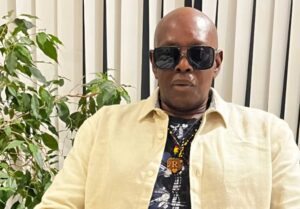
Chief Kayode Samuel
Agbasaga of Ila Orangun, Musician, Producer, Artiste Manager and Cultural Entrepreneur
Chief Kayode Samuel is a distinguished Nigerian musician, songwriter, producer, artiste manager, filmmaker and cultural entrepreneur whose career has connected African music and cultural expression with the British and international creative industries for more than three decades. Based between Nigeria and the United Kingdom, he has worked across live performance, recording, artist development, film, theatre and cultural organisation.
He studied film and television production at Goldsmiths College, London. His early creative experience included work as an assistant director and assistant editor on a Channel 4 documentary concerning Black miners in Britain, as well as involvement with Andrew Lloyd Webber’s celebrated West End production, Starlight Express. These experiences helped establish the multidisciplinary approach that has characterised his subsequent work in music, film and cultural production.
Chief Samuel is particularly respected for his contribution to artiste management and the international development of African music. For seven years, he managed the legendary Afrobeat drummer Tony Allen, whose revolutionary work with Fela Anikulapo-Kuti and Africa 70 helped define one of Africa’s most influential modern musical forms. During this period, Chief Samuel contributed to the expansion of Tony Allen’s European presence and helped facilitate significant creative collaborations, including Allen’s work with British musician and producer Damon Albarn.
He is the co-founder of AWA Band, established in London with British trumpeter, vocalist, composer and arranger Barbara Snow. Emerging from London’s vibrant dance-music culture of the 1990s, AWA Band developed a distinctive musical language combining Afrobeat, highlife, Yoruba chants and call-and-response traditions with Latin rhythms, funk, jazz, house music and electronic dance forms. Recordings such as Timba, Tudo Lindo and Green Samba have earned the group an enduring place within Afro-Latin and international club music.
The band’s creative history includes performances and collaborations with an exceptional circle of musicians, among them Tony Allen, Damon Albarn, Dele Sosimi, Roberto Pla and Jason Yarde. Through this work, Chief Samuel has contributed to the movement of African rhythmic traditions beyond conventional boundaries and into new spaces of performance, recording and international cultural exchange.
As the founder of Ekostar Music, he has supported the recording and release of works by Nigerian musicians and contributed to the rediscovery and reissue of important Nigerian music from the 1970s. His commitment to preserving this important period of musical history is also reflected in his forthcoming book, Lagos 70: The Evolution of Lagos/70’s Music. The work draws upon his experience as a musician, manager, producer and cultural observer to document the remarkable artists, institutions, performance spaces and creative movements that shaped Lagos as one of Africa’s most dynamic musical capitals during the 1970s.
Chief Samuel also founded Ile Agbasaga in Osogbo as a cultural space supporting writers, visual artists, musicians and creative production. His dedication to Yoruba culture and African artistic heritage is further reflected in his traditional title, the Agbasaga of Ila Orangun.
In 2023, Chief Samuel received the Wale Olomu Memorial Awards Special Recognition Award for his contribution to artiste management. He remains a committed advocate for the preservation of African musical history, the development of creative talent and the creation of meaningful partnerships between African and international cultural communities.
As a principal cultural and organisational collaborator in the African Heritage Festival London, Chief Kayode Samuel brings to the Festival an extraordinary wealth of experience in music, creative partnerships and cultural production. His career represents an important bridge between the historic foundations of African popular music and the new global audiences, technologies and creative possibilities through which that heritage continues to evolve.